Understanding the Kanban Method Through the Lens of PMBOK Principles

The Kanban method has gained popularity as a flexible approach to managing work and improving efficiency. While it originated in manufacturing, its principles apply broadly across industries, especially in project management. The Project Management Body of Knowledge (PMBOK) offers a comprehensive framework for managing projects, emphasizing processes, knowledge areas, and best practices. Exploring Kanban through the PMBOK lens reveals how these two approaches complement each other and how project managers can integrate Kanban into their workflows effectively.
How Kanban Aligns with PMBOK Knowledge Areas
PMBOK organizes project management into ten knowledge areas, including scope, time, cost, quality, and risk management. Kanban supports many of these areas by providing visual control and continuous flow of work.
Scope Management
Kanban helps teams visualize work items clearly, making it easier to define and control project scope. Each card on the Kanban board represents a task or feature, allowing teams to track what is in progress and what remains. This transparency reduces scope creep by making changes visible to all stakeholders.
Time Management
Kanban emphasizes limiting work in progress (WIP), which reduces multitasking and bottlenecks. By managing flow and cycle times, teams can deliver work faster and more predictably. PMBOK’s focus on schedule management aligns with Kanban’s goal of smooth, continuous delivery.
Quality Management
Kanban encourages incremental delivery and frequent feedback, which supports quality control. Teams can identify defects or issues early by reviewing work items regularly. This iterative approach fits well with PMBOK’s quality management processes that stress monitoring and controlling quality.
Risk Management
Visualizing work and limiting WIP helps identify risks such as delays or resource overload. Kanban boards make it easier to spot bottlenecks or stalled tasks, allowing teams to address risks proactively. This complements PMBOK’s risk identification and mitigation strategies.
Integrating Kanban Practices into PMBOK Processes
PMBOK describes five process groups: initiating, planning, executing, monitoring and controlling, and closing. Kanban can enhance these processes by adding clarity and flexibility.
Initiating and Planning
During project initiation, defining the work breakdown structure (WBS) is crucial. Kanban boards can represent the WBS visually, breaking down deliverables into manageable tasks. Planning becomes more dynamic as teams can adjust priorities on the board without extensive documentation.
Executing
Kanban supports execution by focusing on flow and limiting WIP. Teams pull tasks from the backlog as capacity allows, promoting a just-in-time approach. This reduces idle time and keeps the team focused on current priorities.
Monitoring and Controlling
The Kanban board serves as a real-time status report, making it easier to track progress and identify issues. Metrics like cycle time and throughput provide quantitative data to support PMBOK’s monitoring and controlling activities.
Closing
Kanban encourages continuous improvement, which can extend into project closure. Teams review completed work and processes to identify lessons learned and areas for future improvement, aligning with PMBOK’s closing process.
Practical Examples of Kanban and PMBOK Working Together
Consider a software development project using PMBOK as the overall framework. The team adopts Kanban to manage daily tasks and sprints.
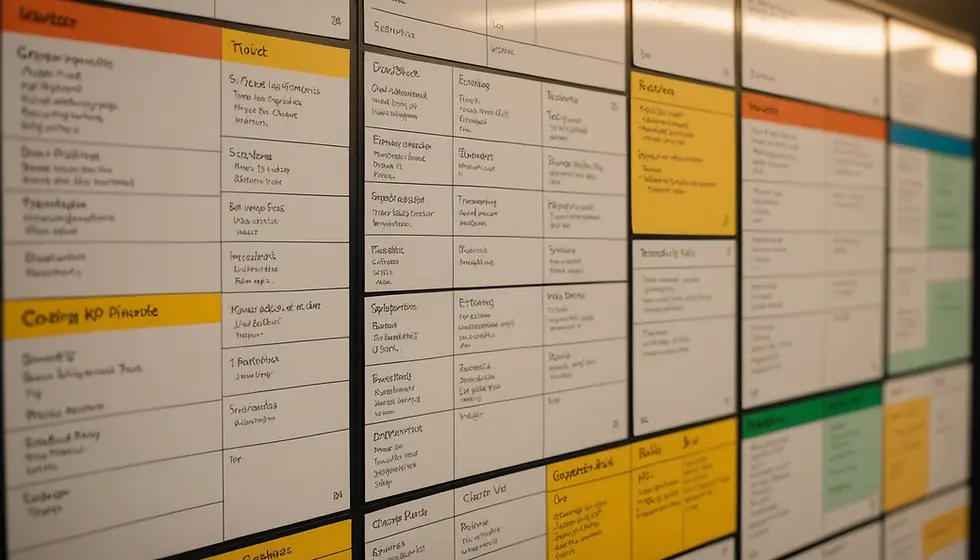
The project manager creates a Kanban board with columns such as Backlog, Ready, In Progress, Testing, and Done.
Each task card includes details like description, priority, and estimated effort, linking back to the project scope.
The team limits WIP to three tasks per column to avoid overload and maintain focus.
Daily stand-ups use the Kanban board to discuss progress and blockers, supporting PMBOK’s communication management.
Cycle time metrics help the team forecast delivery dates more accurately, improving schedule management.
Regular retrospectives identify process improvements, feeding into quality and risk management.
This example shows how Kanban’s visual and flow-based approach complements PMBOK’s structured processes, creating a balanced project management system.
Benefits of Using Kanban Within PMBOK Framework
Integrating Kanban into PMBOK-based projects offers several advantages:
Improved Visibility
Kanban boards provide a clear, visual representation of work status, making it easier for all team members and stakeholders to understand progress.
Greater Flexibility
Kanban allows teams to adapt quickly to changes without disrupting the entire project plan, which is valuable in dynamic environments.
Enhanced Flow and Efficiency
Limiting WIP and focusing on continuous delivery reduces delays and improves throughput.
Better Risk Identification
Visualizing bottlenecks and stalled tasks helps teams spot risks early and take corrective action.
Stronger Collaboration
Kanban encourages communication and teamwork through shared visual tools and regular reviews.
Final Thoughts on Kanban and PMBOK Integration
The Kanban method offers practical tools that align well with PMBOK principles. By combining Kanban’s visual workflow management with PMBOK’s structured processes, project managers can improve transparency, adaptability, and delivery speed. This integration supports better decision-making and continuous improvement throughout the project lifecycle.