Water Energy Carbon Nexus: Why Fixing One Impact Can Worsen Another
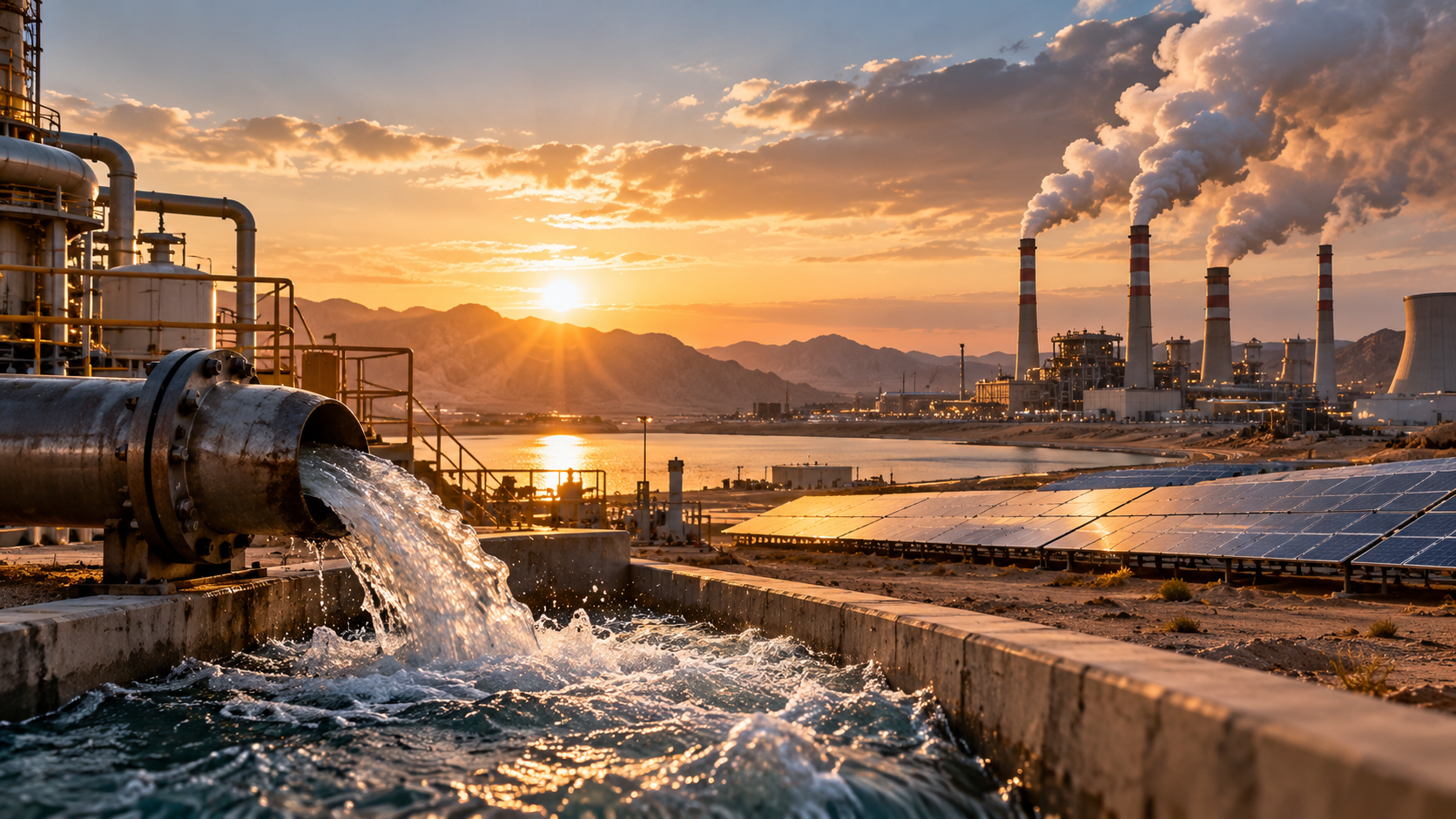
A project can cut freshwater withdrawals and raise emissions. It can lower Scope 1 emissions and lock in higher power demand. It can improve water resilience and still weaken the investment case.
That is the practical problem at the heart of the water-energy-carbon nexus. In high-risk, capital-intensive sectors, water, energy, and carbon do not move in neat separate lanes. They interact through pumps, heat exchangers, membranes, compressors, boilers, grids, chemicals, materials, logistics, and permitting constraints.
For major projects, this is not an academic sustainability topic. It affects concept selection, FEED, design, procurement, value engineering, financing, operating cost, asset life, ESG claims, and exposure to future regulation. A narrow win on one metric can create a bigger liability somewhere else.
The Nexus Is Where Good Intentions Meet Engineering Limits
The water-energy nexus is already well understood in engineering and policy circles. Energy systems need water for cooling, steam generation, extraction, processing, cleaning, hydrogen production, and some forms of fuel supply. Water systems need energy for abstraction, pumping, treatment, desalination, distribution, heating, cooling, and reuse.
Carbon adds a third constraint. Energy use creates emissions when power or heat comes from fossil sources. Low-carbon systems require materials, infrastructure, and land. Water treatment can require significant chemicals and power. Carbon reduction measures can increase water demand. Water resilience measures can raise energy intensity.
The result is a three-way system:
Objective | Common project response | Possible unintended consequence |
Reduce freshwater use | Desalination, reuse, dry cooling, closed-loop systems | Higher electricity demand, higher embodied carbon, brine or waste management issues |
Reduce operating emissions | Electrification, carbon capture, renewable power procurement | More grid dependence, more water use in some processes, greater material demand |
Improve climate resilience | Redundant water sources, storage, advanced treatment | Higher capital cost, idle assets, increased lifecycle emissions |
Cut energy cost | Heat integration, process changes, lower treatment standards where allowed | Water quality risk, discharge limits, reliability constraints |
This is why the water-energy-carbon nexus should be assessed as a system. ISO lifecycle assessment standards, the GHG Protocol, IFC performance expectations, and regulator guidance all point in the same direction: define boundaries, assess significant impacts, and avoid shifting burdens from one category to another.
The challenge is commercial as much as technical. A project that performs well on a single ESG indicator can still have higher lifecycle costs, lower resilience, or a weak decarbonization story once Scope 2, Scope 3, water stress, and asset utilization are tested.
Experienced project teams know this pattern. A solution looks clean in a discipline review. It looks less clean when you add power supply, grid emissions, water availability, chemicals, maintenance, construction materials, and future operating modes.
Where One Improvement Can Create Another Problem
The trade-offs are not theoretical. They appear across desalination, wastewater reuse, carbon capture, hydrogen, cooling, electrification, and renewable integration.
Desalination Can Solve Water Scarcity and Increase Energy Exposure
Desalination is a clear example. It can provide reliable water where freshwater is scarce or politically constrained. For coastal industrial sites, ports, LNG terminals, refineries, mining export hubs, and island utilities, desalination may be the most dependable option.
But desalinated water is more energy-intensive than many conventional freshwater sources. Reverse osmosis has improved over time, but it still requires high-pressure pumping, pretreatment, membrane replacement, brine management, and intake infrastructure. Thermal desalination can be attractive where waste heat is available, but it can also lock a facility into heat and power dependencies.
The carbon outcome depends on the energy source. A desalination system powered by a high-emission grid can increase indirect emissions. A system powered by firm low-carbon electricity can perform far better. A system tied to intermittent renewables may need storage, backup, or operational flexibility. Each choice has cost and reliability implications.
Desalination can also move the environmental burden offshore. Brine discharge, chemical use, intake impacts, and marine permitting matter. In marine and coastal infrastructure projects, these issues can affect schedule, community acceptance, and license conditions.
So the question is not whether desalination is good or bad. The better question is whether it is the right resilience measure given actual water stress, grid carbon intensity, marine constraints, and the asset's operating profile.
Wastewater Reuse Can Reduce Freshwater Demand and Raise Treatment Intensity
Industrial wastewater reuse can cut freshwater withdrawals and reduce discharge volumes. In water-stressed regions, it can also make a project more bankable by reducing exposure to source water restrictions.
Yet reuse often requires higher treatment standards than discharge. Depending on the use case, the project may need biological treatment, filtration, membranes, reverse osmosis, advanced oxidation, disinfection, evaporation, crystallization, or complex sludge handling. The more difficult the contaminants, the more energy and chemicals the system may require.
Mining, refining, chemicals, food processing, manufacturing, and utility sites often pursue reuse for the right reason. The hidden risk comes when teams treat “reuse percentage” as the headline metric and fail to test the cost, power, waste, and carbon of achieving it.
For example, a closed-loop target may reduce freshwater intake. It may also require more pumping, more membrane cleaning, more reject handling, and a higher risk of downtime. In some cases, partial reuse delivers a better lifecycle result than maximum reuse.
That's hard to say in an ESG report, but it is often true in engineering terms.
Carbon Capture Reduces Stack Emissions but Adds Energy and Water Demand
Carbon capture can reduce direct carbon emissions from cement, steel, refining, gas processing, hydrogen production, and power generation. The IPCC and IEA both treat carbon capture, utilization, and storage as relevant for hard-to-abate sectors in many decarbonization pathways.
But capture systems consume energy. Solvent-based post-combustion capture can require low-pressure steam, electricity, cooling, pumps, fans, compressors, and solvent management. Captured CO₂ also needs compression, transport, injection, monitoring, or use. These steps carry cost and energy demand.
Water can be affected too. Some capture processes require cooling and makeup water. Others create new wastewater streams or require chemical handling. If the extra steam or power comes from fossil sources, part of the carbon benefit can be eroded. If the plant adds capture but must run harder to supply capture energy, the project needs a clear net emissions calculation.
The GHG Protocol distinction between Scope 1, Scope 2, and Scope 3 matters here. A facility may reduce Scope 1 emissions while increasing purchased electricity emissions. If the power supply is not low-carbon, the reported improvement can look stronger than the atmospheric outcome.
Carbon capture can be the right answer. It is often one of the few credible options for process emissions. But the business case should include energy penalty, water use, CO₂ transport and storage integrity, uptime assumptions, solvent or sorbent lifecycle impacts, and long-term liability.
Hydrogen Production Depends on Both Electricity and Water Quality
Hydrogen is often promoted as a decarbonization route for refining, ammonia, steel, heavy transport, shipping fuels, and energy storage. The climate value depends on how it is produced.
Electrolytic hydrogen requires electricity and high-purity water. If the electricity is renewable or otherwise low-carbon, lifecycle emissions can be low. If the electricity comes from a carbon-intensive grid, the hydrogen may carry high indirect emissions. That is why credible hydrogen appraisal must look at temporal matching, grid mix, power purchase agreements, curtailment, additionality claims, and standby power.
Water demand also matters. Electrolyzers require treated water, not just raw water. In coastal or arid locations, projects may add desalination and demineralization. That creates additional energy use, brine, concentrate, chemicals, and maintenance. For a large industrial hydrogen project, the water treatment system may become a critical path item rather than a small utility package.
Blue hydrogen, produced from natural gas with carbon capture, involves different trade-offs. It depends on methane emissions, reformer efficiency, capture rates, CO₂ transport and storage, water use, and gas supply. A narrow plant boundary can make one route look better than it is. A full lifecycle boundary can change the ranking.
The central lesson applies across hydrogen colors and definitions: labels are not enough. A credible investment case needs boundary conditions, real power assumptions, water source risk, and lifecycle carbon accounting.
Industrial Cooling Can Save Water or Save Energy, Rarely Both at Once
Industrial cooling is a classic nexus problem. Thermal power plants, LNG facilities, refineries, petrochemical sites, data centers, metallurgy operations, and large manufacturing plants all need heat rejection.
Wet cooling is often energy-efficient but can consume significant water through evaporation. Dry cooling reduces water consumption but usually requires more capital, larger heat exchange surfaces, higher fan power, and can reduce efficiency in hot weather. Hybrid systems sit between the two, but they add complexity.
The right answer depends on site conditions. In a water-stressed basin, reducing water withdrawals may be worth the energy penalty. In a region with a carbon-intensive grid and secure water allocation, the answer may differ. In a hot climate, dry cooling can affect plant output when power is most valuable.
Project teams often revisit cooling during value engineering because it carries major capital cost. That is where sustainability value can be lost. A lower-capex cooling choice can increase long-term water risk. A low-water option can increase power consumption and operational emissions. A system-level comparison should quantify both.
Electrification Can Reduce Onsite Emissions and Move Emissions to the Grid
Electrification is central to many decarbonization strategies. Electric drives, heat pumps, electric boilers, e-cranes, shore power, battery-electric mobile equipment, and electric process heat can reduce direct fossil fuel use. In many applications, electrification also improves control and lowers local air pollution.
Yet electrification alone does not eliminate emissions. It moves emissions to the electricity supply unless the power is low-carbon. That is why grid carbon intensity, time-of-use emissions, renewable contracts, backup generation, and transmission constraints matter.
For construction, mining, ports, offshore support, and marine operations, electrification may also require new substations, charging systems, battery rooms, fire protection, cable routes, grid upgrades, and replacement strategies. These carry embodied carbon. They also affect operations.
The same applies to electric process heat in manufacturing. A kiln, furnace, boiler, or dryer cannot be appraised on onsite fuel savings alone. The grid connection, reliability, tariff structure, backup heat, peak demand, and sensitivity to future power prices can determine whether the business case holds.
Renewable Integration Reduces Operational Emissions but Adds System Constraints
Renewable energy can reduce Scope 2 emissions and fossil fuel consumption. IRENA and the IEA both identify renewable power as a major pillar of energy transition. But integration matters.
Solar and wind output fluctuate. Industrial loads often do not. If a facility needs continuous water treatment, cooling, compression, pumping, or marine operations, it may need storage, backup generation, load shifting, or grid support. These systems require capital, materials, maintenance, and space.
Renewables can also change water demand. Solar PV and wind generally use little water during operation compared with thermal generation, which can be a major advantage in water-stressed regions. But the full system may include impacts from battery manufacturing, mineral supply chains, foundations, transmission, and end-of-life management.
The point is not to criticize renewables. It is to design the whole system honestly. Low-carbon energy supply must match operational duty, resilience requirements, and the project's risk profile.
The Project Stages Where Nexus Thinking Matters Most
The worst time to discover a water-energy-carbon conflict is after the main process route, site layout, utility philosophy, and procurement strategy are locked. At that point, options are narrower, and changes cost more.
Assess the nexus early and carry it through each stage.
Concept Selection Should Compare Systems, Not Single Technologies
Concept selection often frames choices as discrete options: desalination versus freshwater import, wet cooling versus dry cooling, gas boiler versus electric boiler, discharge versus reuse, capture versus no capture.
That is too narrow. The real comparison is system against system.
A desalination option includes intake, pretreatment, membranes, brine disposal, pumps, grid demand, backup power, chemical logistics, maintenance, permitting, and lifecycle emissions. A freshwater import option includes water rights, pipeline losses, social license, drought risk, pumping energy, and competing users. The right comparison may change when you include water stress, power emissions, and climate resilience.
This is where sustainable project management needs more rigor. ESG objectives must be translated into design criteria and decision rules. Otherwise, teams can select the option that looks best on a dashboard but performs poorly in the field.
FEED Should Lock in the Right Boundaries
Front-end engineering design is where scope definition becomes real. It is also where boundary errors become expensive.
A lifecycle view should cover:
Direct emissions from onsite fuel and process sources
Indirect emissions from purchased electricity, steam, heating, and cooling
Material and equipment embodied carbon where material choices are significant
Water abstraction, consumption, discharge, quality, and basin stress
Energy intensity under normal, peak, turndown, and degraded modes
Waste streams, chemicals, maintenance, and end-of-life implications
ISO lifecycle assessment principles are useful here because they force teams to define goal, scope, functional unit, system boundaries, allocation, and impact categories. The GHG Protocol helps structure emissions reporting. IFC and World Bank environmental, health, and safety guidance also point toward resource efficiency, pollution prevention, and context-sensitive assessment.
The practical issue is discipline integration. Water engineers, process engineers, electrical teams, carbon specialists, procurement leads, and finance teams often work to different assumptions. FEED should reconcile those assumptions before the cost estimate hardens.
Procurement Can Make or Break Lifecycle Performance
Procurement decisions often shape the actual footprint more than strategy documents do. Pump efficiency, membrane life, compressor performance, materials, modularization, shipping distance, vendor energy guarantees, control systems, and maintenance packages all affect lifecycle outcomes.
Lowest bid can be expensive if it increases energy demand, chemical use, downtime, or replacement frequency. A higher-capex package may reduce operating cost and emissions over the asset life. The reverse can also be true if a complex “green” package performs poorly or needs rare consumables.
Procurement should ask vendors for data that supports comparison, not marketing claims. That includes energy consumption at realistic duty points, water consumption, chemical use, expected replacement cycles, warranty conditions, embodied carbon data where available, and performance under local ambient conditions.
Environmental product declarations can help when available. They are not universal. Where they are missing, teams should use transparent assumptions and sensitivity analysis rather than false precision.
Value Engineering Should Not Delete Resilience by Accident
Value engineering can improve a project. It can also remove the features that made the concept sustainable in the first place.
Common examples include reducing water storage, downsizing treatment redundancy, selecting lower-efficiency pumps, removing heat recovery, deferring renewable integration, simplifying wastewater segregation, or switching cooling technology without re-running the lifecycle analysis.
Each change may look minor. Together, they can alter the water balance, energy balance, and carbon profile. They can also shift risk into operations, where it becomes more expensive to manage.
A good value engineering process does not protect every sustainability feature. It tests each change against the integrated business case. If removing a feature reduces capex but increases outage risk, water supply exposure, grid demand, or future carbon cost, the saving may not be real.
Investment Appraisal Must Include Future Operating Risk
Capital approval papers often show CAPEX, OPEX, schedule, emissions, and ESG benefits as separate lines. The nexus cuts across all of them.
A water-saving design may require more electricity. That increases exposure to power prices, carbon intensity, grid constraints, and the need for backup generation. A low-carbon design may require critical equipment with long lead times or materials with high embodied carbon. A reuse system may reduce water imports but create difficult waste streams.
Financial appraisal should include sensitivity to:
Grid emissions and future power mix
Water availability, drought restrictions, and basin competition
Carbon pricing, reporting rules, and customer requirements
Energy prices, demand charges, and curtailment risk
Equipment degradation, fouling, downtime, and maintenance
Future expansion, asset life, and decommissioning
This is not about adding complexity for its own sake. It is about avoiding weak business cases. A project that ignores these variables may pass approval and fail in operation.
What Poor Systems Analysis Looks Like in Practice
Poor nexus analysis usually has a pattern. The project sets a target, chooses technology that supports it, and then reports the target as progress. The wider system gets less attention.
That can produce several problems.
Misleading ESG Claims
A facility may claim lower water impact by switching to desalination, while electricity demand and carbon emissions rise. A plant may claim lower Scope 1 emissions by electrifying heat, while Scope 2 emissions rise because the grid is carbon-intensive. A project may claim circular water management while generating a brine or sludge stream that requires intensive treatment.
These claims are not always intentional greenwashing. Often, they result from poor boundaries. But markets, regulators, lenders, and communities are becoming less tolerant of incomplete claims.
The Greenhouse Gas Protocol, emerging climate disclosure rules, and investor expectations all increase pressure for clearer accounting. Claims must match the boundary and evidence.
Higher Lifecycle Cost
A design that minimizes capex can increase energy use for decades. A design that maximizes reuse can create high membrane replacement and chemical costs. A dry cooling system can reduce water cost but lower process efficiency under hot conditions. A carbon capture system can raise maintenance and utility demand.
Lifecycle cost matters because major industrial assets often operate for decades. A small efficiency penalty can become material over time. A fragile water strategy can create production losses that dwarf the original savings.
Stranded or Underused Infrastructure
Stranded infrastructure can result from overbuilding based on a single assumption. A water reuse plant may be oversized if production changes. A hydrogen-ready system may sit idle if power prices or offtake do not support operation. A carbon capture network may be underused if capture supply, storage access, or regulation changes.
Renewable integration can face the same risk. A facility may install generation it cannot use efficiently because it did not properly assess load profiles, grid export limits, or storage.
Capital-intensive industries cannot afford symbolic assets. Infrastructure must match real operating needs and credible transition pathways.
Permitting and Stakeholder Risk
Water and carbon decisions are increasingly visible. A project that reduces emissions but increases abstraction in a stressed basin may face community opposition. A desalination plant with poorly assessed marine discharge can face permitting delays. A renewable or transmission project can face scrutiny over land, biodiversity, or materials.
UNEP, the World Bank, and engineering institutions have long emphasized that environmental impacts occur within local ecological and social contexts. A ton of carbon matters globally. A gallon of water withdrawn from a stressed basin has local consequences. Good analysis respects both.
Leadership Questions That Expose Hidden Trade-offs
The best way to manage the nexus is to ask harder questions early. These questions should appear in business case reviews, design assurance, HAZOP-adjacent environmental reviews, procurement strategy, and ESG governance.
System boundary
What is included in the assessment, and what is outside it? Does the analysis include Scope 1, Scope 2, and relevant Scope 3 emissions? Does it include embodied carbon in major equipment and materials where the difference between options is significant?
Functional performance
Are options compared on the same functional output? For example, are water systems compared per unit of usable water at the required quality and reliability, not just per unit of intake?
Water context
Is the project located in a water-stressed basin? Does it account for seasonal variability, competing users, climate change, groundwater limits, and discharge conditions? Does the water strategy still work under drought or expansion?
Energy source
What power source supports the preferred option? What is the grid carbon intensity now, and how might it change? Does the project rely on renewable certificates, direct supply, storage, backup generation, or future grid decarbonization?
Carbon accounting
Does the preferred option reduce actual lifecycle emissions, or only onsite emissions? Are energy penalties, chemicals, transport, construction materials, and replacement cycles included where material?
Operational reality
How does the system perform at turndown, during peak temperatures, with fouling, during maintenance, or under degraded water quality? Are vendor guarantees based on realistic conditions?
Commercial resilience
What happens if electricity prices rise, water allocations tighten, carbon costs increase, or reporting requirements change? Does the project still make sense?
Trade-off transparency
Which ESG objective is being improved, and which one may get worse? Has leadership explicitly accepted that trade-off, or is it hidden in the technical assumptions?
These questions do not slow decisions when used well. They prevent rework. They also help leaders defend decisions to boards, lenders, regulators, customers, and communities.
How to Build the Nexus Into Project Governance
The practical answer is not to create another standalone ESG workstream. That often produces late-stage reports that don't change the design. The better approach is to embed nexus analysis into existing project controls.
Start with decision criteria at concept stage. Define how water, energy, carbon, resilience, cost, and operability will be weighted. Make trade-offs explicit. If water resilience is critical because the site is in a stressed basin, say so. If carbon intensity is the binding constraint because customers require low-carbon products, say so.
Use scenario analysis. Test options under different grid mixes, water availability, carbon prices, production rates, and climate conditions. Avoid a single base case that hides fragility.
Require integrated balances. The water balance, energy balance, and emissions inventory should use aligned assumptions. If a reuse system increases power demand, that change should appear in the electrical load list and emissions model. If carbon capture requires cooling, that change should appear in the water balance.
Bring procurement in early. Vendor choices affect the footprint. Equipment efficiency, materials, replacement cycles, and maintenance requirements should be part of bid evaluation where material.
Tie ESG claims to evidence. If the project claims reduced carbon emissions, specify the boundary. If it claims lower water impact, identify whether that means withdrawal, consumption, discharge quality, basin risk, or resilience. These are different claims.
Keep the analysis live. A project can change significantly between concept, FEED, detailed design, construction, commissioning, and operation. Each major change should trigger a check against water, energy, and carbon assumptions.
The strongest teams treat lifecycle sustainability as an engineering and commercial discipline, not a communications exercise. They use evidence, declare assumptions, and accept that some trade-offs are real.
Major projects should evaluate water, energy, and carbon as one connected system because the asset will operate as one connected system. Separate ESG metrics can hide risk. Integrated analysis exposes it early, when decisions are still flexible, and value can still be protected.